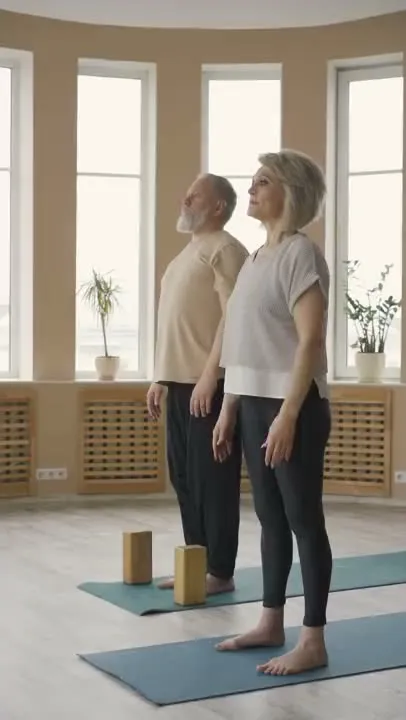
Physiotherapy Exercises for Parkinson's Disease
Exercise is widely recognised as an important part of managing Parkinson's disease. Physiotherapy can help you stay active, maintain mobility, and manage symptoms.
Why Exercise Matters in Parkinson's Disease
Parkinson's disease is a progressive neurological condition that affects movement. Common motor symptoms include tremor, rigidity (muscle stiffness), bradykinesia (slowness of movement), and postural instability. As the condition progresses, these symptoms can significantly affect a person's ability to walk, maintain balance, and perform daily activities.
There is growing evidence that regular, structured exercise may help manage the motor symptoms of Parkinson's disease and support functional independence. Exercise does not stop the disease from progressing, but it may help maintain mobility and physical function for longer. Current clinical guidelines recommend that people with Parkinson's engage in regular physical activity as part of their overall management.
The role of a physiotherapist is to design and supervise an exercise program that is tailored to the person's current symptoms, functional level, and goals. Because Parkinson's affects everyone differently and changes over time, the program needs to be regularly reviewed and adjusted.
Gait Training: Improving How You Walk
Walking difficulties are one of the most common and disabling features of Parkinson's disease. People with Parkinson's often develop a characteristic gait pattern: shorter steps, reduced arm swing, shuffling, and difficulty initiating the first step (known as start hesitation). Freezing of gait - where the feet feel "glued" to the floor - can also occur, particularly in doorways, narrow spaces, or when turning.
Physiotherapy gait training for Parkinson's uses specific strategies to address these problems:
- Cueing strategies - external cues such as a rhythmic beat (auditory cueing), visual markers on the floor (visual cueing), or verbal prompts can help override the impaired automatic movement patterns. For example, stepping over a line on the floor or walking to the beat of a metronome can help increase step length and reduce shuffling.
- Conscious attention to step length - practising taking deliberate, larger steps with heel strike. Because the automatic movement system is impaired in Parkinson's, using conscious attention can help bypass the affected pathways.
- Turning practice - practising wide turns rather than pivoting, which reduces the risk of freezing and losing balance during directional changes.
- Freezing strategies - techniques to manage freezing episodes, such as shifting weight from side to side, marching on the spot, or stepping over an imaginary line before moving forward.
Balance Training for Parkinson's
Postural instability is one of the cardinal features of Parkinson's disease, and it becomes more prominent as the condition progresses. People with Parkinson's are at significantly higher risk of falls than the general older population, and falls are a leading cause of injury and hospitalisation in this group.
Balance training for Parkinson's focuses on challenging the balance system in a safe, controlled way. This includes:
Standing Balance Exercises
Progressive standing exercises that reduce the base of support - from standing with feet apart, to feet together, to tandem stance, to single-leg standing. These are done with appropriate support and gradually progressed as confidence and ability improve.
Weight Shifting
Practising shifting your weight forward, backward, and side to side while standing. This helps retrain the balance reactions that are often impaired in Parkinson's and improves your ability to recover from a loss of balance.
Reactive Balance Training
Exercises that practise the stepping and reaching reactions needed to catch yourself if you are pushed or stumble. This type of training targets the automatic protective responses that are often delayed in Parkinson's.
Amplitude-Based Movement: LSVT BIG Principles
One of the hallmark features of Parkinson's disease is that movements become smaller over time. People with Parkinson's often do not realise their movements have become smaller because their internal sense of movement amplitude is recalibrated by the disease. What feels like a normal-sized step may actually be a very small step.
LSVT BIG is a standardised, evidence-based treatment approach developed specifically for Parkinson's disease. It is based on the principle of "amplitude training" - retraining the brain to produce bigger, more normal-sized movements. The approach involves:
- Exaggerated, big movements - all exercises and functional tasks are performed with deliberate, oversized movements. The instruction "think big" is a core cue throughout the program.
- High-effort practice - the program demands maximum effort during exercises to drive neuroplastic changes. This is not a gentle stretching program; it requires sustained physical effort.
- Functional application - big movement principles are applied to everyday tasks such as walking, reaching, writing, and getting dressed, so the benefits carry over into daily life.
Note: LSVT BIG is a certified program that requires specific training to deliver. Not all physiotherapists are LSVT BIG certified. However, the underlying principles of amplitude-based training - emphasising bigger movements and high-effort practice - can be incorporated into physiotherapy programs for people with Parkinson's.
Dual-Task Training
Dual-task training involves practising two tasks at the same time - typically a physical task (like walking) combined with a cognitive task (like counting backwards or naming items). This type of training is particularly relevant for Parkinson's because the disease impairs the ability to perform automatic movements. When you add a cognitive demand on top of a motor task, movement quality often deteriorates significantly.
In everyday life, dual-tasking is constant. Walking while talking to someone, carrying a cup of tea while navigating around furniture, or stepping off a kerb while checking for traffic are all dual-task scenarios. For people with Parkinson's, these situations represent an increased falls risk.
Physiotherapy can incorporate safe, structured dual-task practice to help improve your ability to manage these situations. Examples include walking while counting, stepping over obstacles while answering questions, or carrying an object while walking a set path.
For more information about physiotherapy for neurological conditions including Parkinson's, visit our neurological conditions service page. For information on how physiotherapy is funded, see our funding and payment options page.
Frequently Asked Questions
Can exercise slow down Parkinson's disease?
Exercise cannot stop or reverse Parkinson's disease, which is a progressive neurological condition. However, there is evidence that regular, structured exercise may help maintain physical function, mobility, and independence for longer. Current clinical guidelines recommend that people with Parkinson's engage in regular physical activity as part of their overall management plan.
What type of exercise is best for Parkinson's?
Evidence supports a combination of approaches including gait training, balance exercises, strength training, and amplitude-based movement programs such as LSVT BIG. The best program is one that is tailored to your individual symptoms and stage of the condition by a physiotherapist experienced in neurological rehabilitation.
How often should someone with Parkinson's exercise?
Current guidelines generally recommend regular physical activity most days of the week. A physiotherapist can help you determine the right frequency and intensity based on your individual situation. Consistency is more important than intensity - regular, moderate exercise is typically more sustainable and beneficial than infrequent, high-intensity sessions.
Content reviewed by Jovi Villanueva, AHPRA Registered Physiotherapist (PHY0001876394), Principal Physiotherapist at Wellworx Physio.
Last updated: 19/09/2026
Living with Parkinson's? We Can Help
We provide mobile physiotherapy tailored for people with Parkinson's disease. Sessions in the comfort of your home.